When a Film Lyricist Becomes India’s Highest Literary Honouree
For fifty years, R. Vairamuthu wrote for the screen. In March 2026, the Bharatiya Jnanpith gave him the country’s oldest and highest literary honour anyway — only the third Tamil writer ever to receive it.
Image: Illustration commissioned by Antare Kala
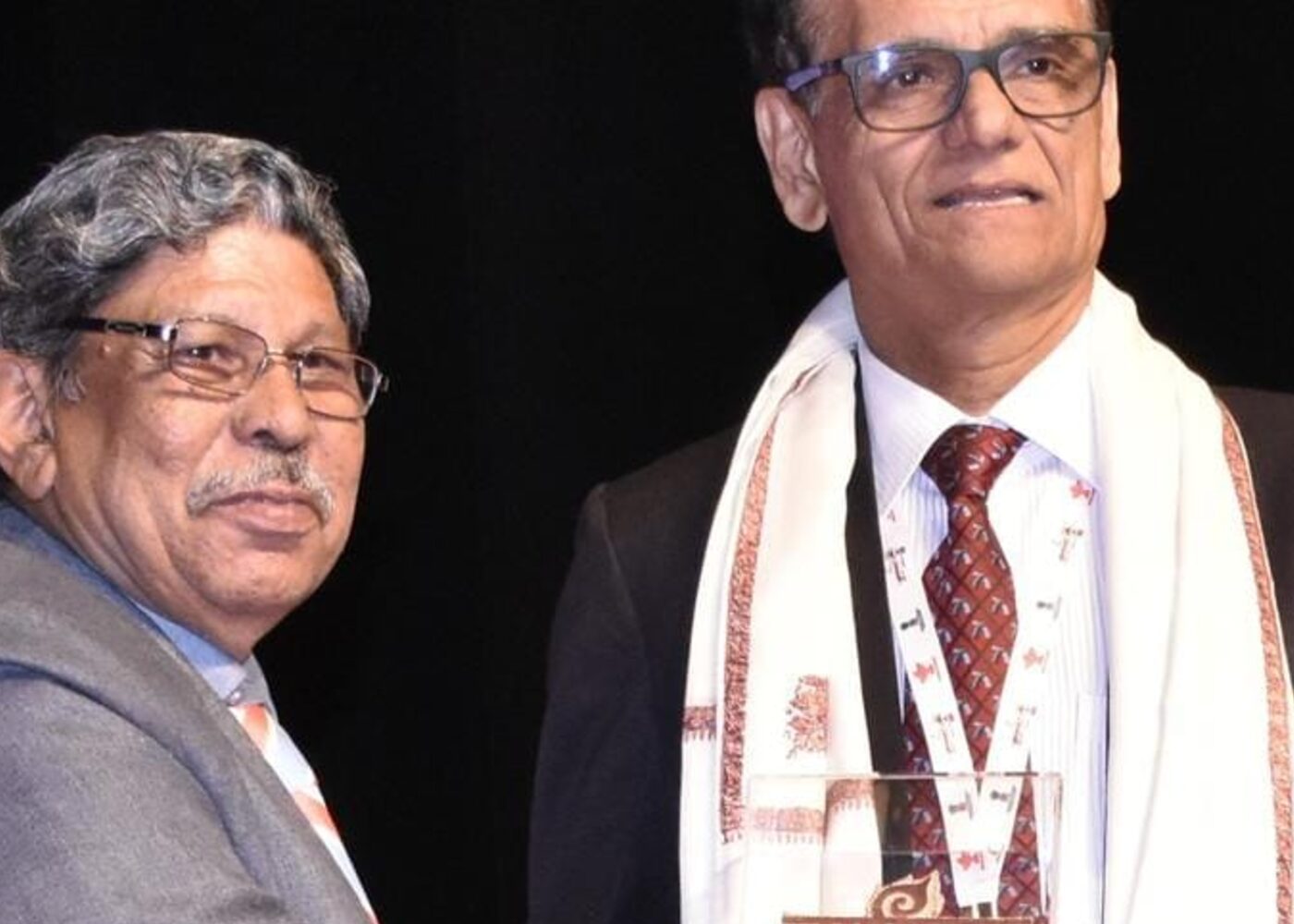
On March 14, 2026, the Bharatiya Jnanpith trust announced that its 60th Jnanpith Award — India's oldest and most prestigious literary honour, instituted in 1965 — would go to Tamil poet, lyricist and novelist R. Vairamuthu. It made him only the third Tamil-language writer to receive the award in six decades, after Akilan (1975) and Jayakanthan (2002).
What makes the citation unusual is where most of Vairamuthu's public life happened: not in literary journals, but in film songs. Across a career of more than five decades, he has written over 7,500 songs and poems for Tamil cinema, work that earned him seven National Film Awards — more than any other Indian lyricist — alongside 37-plus books of poetry, essays and novels, among them the celebrated verse-epic Kallikattu Ithikasam. The Jnanpith jury's decision effectively closed a long-running argument in Tamil letters: whether writing built to be sung in a cinema hall can carry the same literary weight as writing built to be read in silence.
The Jnanpith trust doesn't explain that reasoning quote by quote — its citations are brief, and we haven't spoken to a jury member ourselves, so we won't attribute motives we can't verify. What the record does show is a body of work wide enough to make the question moot: a poet fluent in both classical Tamil metre and the demands of a three-minute film song, publishing steadily since the 1970s. Vairamuthu received the award at a formal ceremony on July 13, 2026, alongside the trust's full citation of his contribution to Indian literature.
A song written to be sung by strangers in a cinema hall, and a poem written to be read alone — the Jnanpith Award just said, for the first time in a long time, that Tamil letters won't rank one above the other.
The sentiment that seems to run under six decades of that work, and the honour that has finally met it, is something India's cultural establishment doesn't always extend easily to popular art: सम्मान — respect, on the writing's own terms rather than on the terms of where it was published. That's the same courtesy Antare Kala's Sahitya pillar tries to extend to every register of language it covers, film lyric included.
Bhaav Spotlight · भाव
सम्मान (Respect)
Six decades of writing for both the page and the screen, finally read as one body of work, on its own terms.
Sources & Credits
- Bharatiya Jnanpith — Official trust announcement, 60th Jnanpith Award (for the year 2025), and July 13, 2026 conferment ceremony
- The Hindu — "Tamil poet and lyricist R. Vairamuthu conferred with 60th Jnanpith award," July 13, 2026
- Drishti IAS — Current-affairs brief on the 60th Jnanpith Award, March 2026
This is a desk report on public, verifiable developments — official announcements, award lists, festival programming and GI/UNESCO records. No individual is quoted here who has not made that statement publicly. Antare Kala's artist profiles, a separate and forthcoming content type, will carry direct interviews and consultation, per our editorial commitment: every artist we feature is credited, contacted, and consulted.